How to Source Power Tools from China: A Practical Guide
If you're an importer in the Middle East, Latin America, or Africa, power tools are a steady, high-demand category. But sourcing them from China isn't as simple as picking a product and hitting "order." You need to think about voltage platforms, certifications, plug types, and supplier reliability. This guide walks you through the practical steps, with honest advice on what to expect.
Understanding the Two Main Cordless Platforms: 21V and 12V
When you start looking at power tools wholesale, you'll quickly meet two dominant cordless platforms: 21V and 12V. These numbers refer to the nominal battery voltage, but they tell you a lot about performance and price.
- 21V systems are the workhorses. They offer more torque and longer runtime, making them ideal for drilling, cutting, and heavy-duty applications. They're also the most common, so batteries and chargers are easier to source and replace. Expect to pay a bit more, but the value is there.
- 12V systems are lighter, more compact, and cheaper. They suit light-duty tasks like screwdriving or small repairs. If your market prioritizes low cost and portability, 12V might be the way to go. One good example from our range is the 12V cordless angle grinder, which is light, compact, and easy to sell.
Your choice should depend on your customers' needs. If they're contractors, go 21V. If they're DIYers, 12V could be enough. Also, consider the ecosystem: many suppliers offer combo kits (drill, impact driver, saw) that share the same battery platform, which is a big selling point.
Certification Basics: What You Really Need
Certifications are a common headache for importers, but they're non-negotiable. For power tools destined for the Middle East, Latin America, and Africa, the big ones are CE and RoHS. CE marks electrical safety and electromagnetic compatibility; RoHS restricts hazardous substances.
- CE is often required, even if it's not legally mandatory in your market. Many buyers expect it as a baseline.
- RoHS is about environmental compliance, and it's increasingly checked.
- IECEE (International Electrotechnical Commission System) is relevant for some Middle Eastern countries, and SABER is specific to Saudi Arabia. If you're shipping there, you'll need to comply with their national programs.
Important: do not rely on generic claims. Always ask for test reports from recognized labs. Certifications take time and money—expect to pay for testing, but avoid any supplier who quotes a suspiciously low fee. The cost varies widely depending on the lab, product, and scope. It's wise to confirm current requirements with the official body or your sourcing agent before committing.
Voltage and Plug Realities: 110V vs 220V
One of the biggest mistakes new importers make is ignoring voltage and plug standards. Your market's grid voltage determines what tools will work.
- 110V is common in parts of Latin America (e.g., Brazil, Colombia) and some Caribbean islands.
- 220V is standard in most of the Middle East, Africa, and many other Latin American countries.
Plug types also vary: the EU uses two round pins, the UK uses three rectangular pins, the US uses two flat pins, and the Middle East has its own variations (e.g., the three-pin South African plug in some Gulf states).
Don't rely on transformers. They're bulky, inefficient, and a fire hazard if mismatched. Instead, order tools with the correct voltage and plug from the start. Most Chinese factories can fit EU, UK, US, or other plugs, but you must specify this clearly. A good China sourcing agent will double-check this for you, saving you from costly returns.
Where the Supply Base Sits: Factory Clusters and the Role of a Trading Company
The power tool industry in China is clustered, not scattered. The main hubs are:
- Zhejiang (especially Yongkang and Jinhua) – the largest cluster for power tools, with hundreds of factories.
- Jiangsu (Nantong, Changzhou) – known for electric and pneumatic tools.
- Guangdong (Foshan, Shenzhen) – strong in battery-powered tools and accessories.
Each cluster has its strengths: Yongkang is famous for price, Guangdong for innovation and quality. When you source directly, you might save a little, but you also deal with language barriers, quality inconsistency, and logistics headaches.
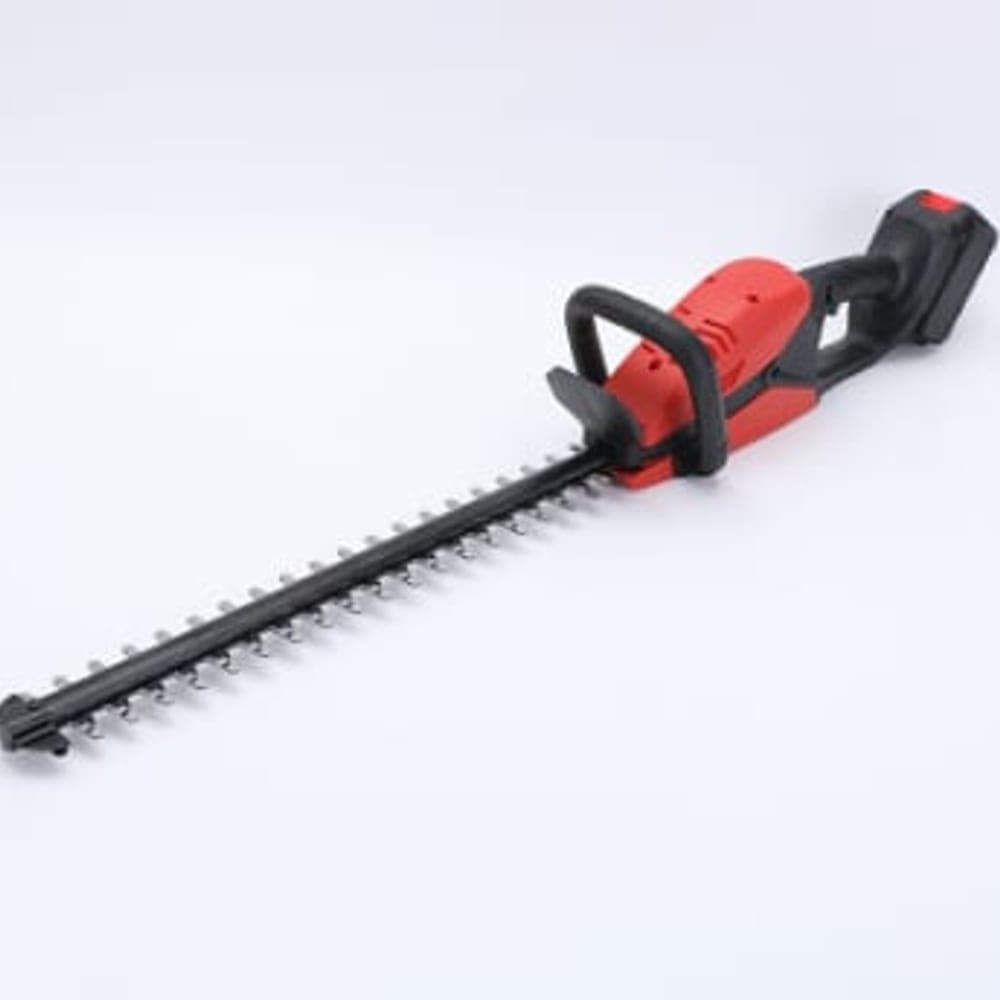
That's where a Yiwu supplier like Novel Home Goods comes in. We're a trading company, not a factory. That's a strength, not a weakness. Because we work with multiple partner factories across these clusters, we can match your specific needs—whether that's a budget-friendly 12V drill or a high-end 21V brushless kit. We also provide independent quality control, so you're not relying on a single factory's word. The same flexibility covers garden and outdoor power equipment—our 21V brushless lawn mower and 21V cordless hedge trimmer are good examples we supply from those partner factories.
MOQ, Samples, and Quality Control
For a first power-tool order, start small. Most factories have a minimum order quantity (MOQ) of 500 to 1,000 pcs per model, but some may go lower for a premium. Don't be afraid to negotiate, especially if you're ordering multiple models.
Always request samples before committing. A sample lets you check build quality, ergonomics, and whether the tool meets your market's expectations. Pay for the sample and shipping—it's a small investment compared to a bad bulk order.
Quality control is non-negotiable. Even with a good supplier, defects happen. A standard practice is to have a pre-shipment inspection done by a third party or your sourcing agent. We do this as part of our service, checking a random percentage of the batch for function, finish, and compliance.
Shipping is another factor. Power tools are heavy and bulky, so sea freight is usually the most economical. Plan for a lead time of 30-45 days after production, plus transit time. Get your packaging right too—tools need robust cartons to survive the journey. And if your tools run on lithium batteries, review our guide on power tool battery shipping regulations before booking freight.
Final Thoughts
Sourcing power tools from China is a smart move for importers who do their homework. Understand the 21V vs 12V decision, nail down certifications, respect voltage and plug standards, and work with a sourcing agent who knows the factory landscape. A trading company like ours can bridge the gap, offering flexibility and independent QC that a single factory can't.
Contact us for a quote via WhatsApp or email WhatsApp +86 18351238137, email qin53390@126.com
For a quote or to source your products, contact our Yiwu sourcing team → Request a quote
Related reading
Related products
Sources
- CE marking — European Commission, Directorate-General for Internal Market, Industry, Entrepreneurship and SMEs — https://single-market-economy.ec.europa.eu/single-market/goods/ce-marking_en — checked 2026-10-13. The Commission states: "The letters 'CE' appear on many products traded on the extended Single Market in the European Economic Area (EEA). They signify that products sold in the EEA have been assessed to meet high safety, health, and environmental protection requirements." The same page adds: "Not all products must have CE marking. It is compulsory only for most of the products covered by the New Approach Directives."
- RoHS (restriction of hazardous substances) — European Commission, Directorate-General for Environment — https://environment.ec.europa.eu/topics/waste-and-recycling/rohs-directive_en — checked 2026-10-13. The Commission states: "EU rules restricting the use of hazardous substances in electrical and electronic equipment to protect the environment and public health." The directive itself is Directive 2011/65/EU — https://eur-lex.europa.eu/legal-content/EN/TXT/?uri=CELEX:32011L0065
- Saudi Arabia — SABER — Saudi Standards, Metrology and Quality Organization (SASO) — https://www.saso.gov.sa/en/sectors/product-safety/Pages/market-access.aspx — checked 2026-10-13. SASO describes the process as starting with "the registration of products on the Saber platform", and states that once "all technical or regulatory requirements are met" it issues "a conformity certificate for the products, allowing them to officially and safely enter the Saudi market". This page covers non-consumer display products; consumer products follow the same platform under a different certificate type.
- Not confirmed from official sources here: which Middle Eastern countries require IECEE certification for a given product; whether a specific voltage and plug type is legally required in a given market; and any product-level statement about CE being "required" outside the EEA. We could not verify those from official sources. Confirm them with the destination market's standards body before you order.